
The iconic red brick building in 1 Mai Square to enter a new phase of transformation
2/02/2026
Through the rehabilitation works for the administrative building with red brick façade on the former Carbochim platform, one of the landmark industrial buildings in Cluj preserved in the RIVUS mixed-use project is now reconsolidated and prepared for the next phases.
The iconic building of the former Carbochim factory was erected between 1949 and 1952 and features approximately 2,300 sqm of gross floor area spanning on four levels. The building carries ambient value, being a landmark for the industrial heritage of Cluj, and is now undergoing a complex consolidation and structural reconfiguration process that will breathe new life into it.
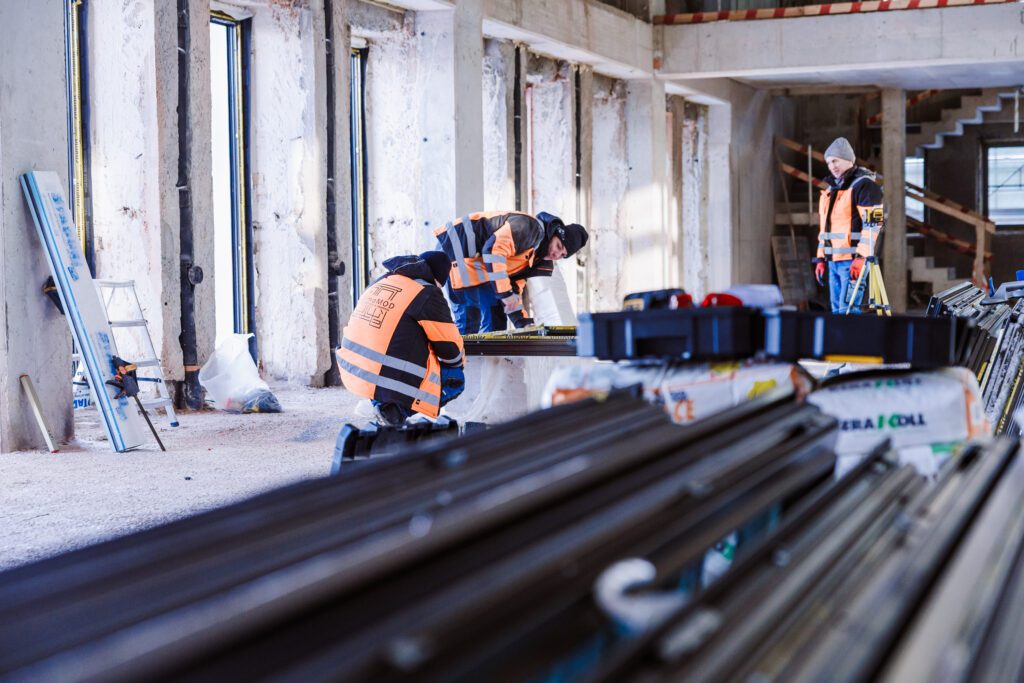
Before the works commenced, the building – an old edifice with a vertical structure comprising the ground floor and three upper floors – featured a closed structure supported by massive beams, load-bearing masonry, and rooms arranged symmetrically along both sides of a central corridor. The severe state of disrepair required complex intervention, preceded by historical, architectural, and structural strength studies, carried out using 3D scans and material tests, in order to identify the elements that could be safely preserved and used as symbols of the area.
Technical assessments classified the building as seismically vulnerable, on account of both its age (over 75 years) and the technological solutions used in its original construction. The final decision was to completely rebuild the interior structure, while carefully preserving and restoring the red brick façade.
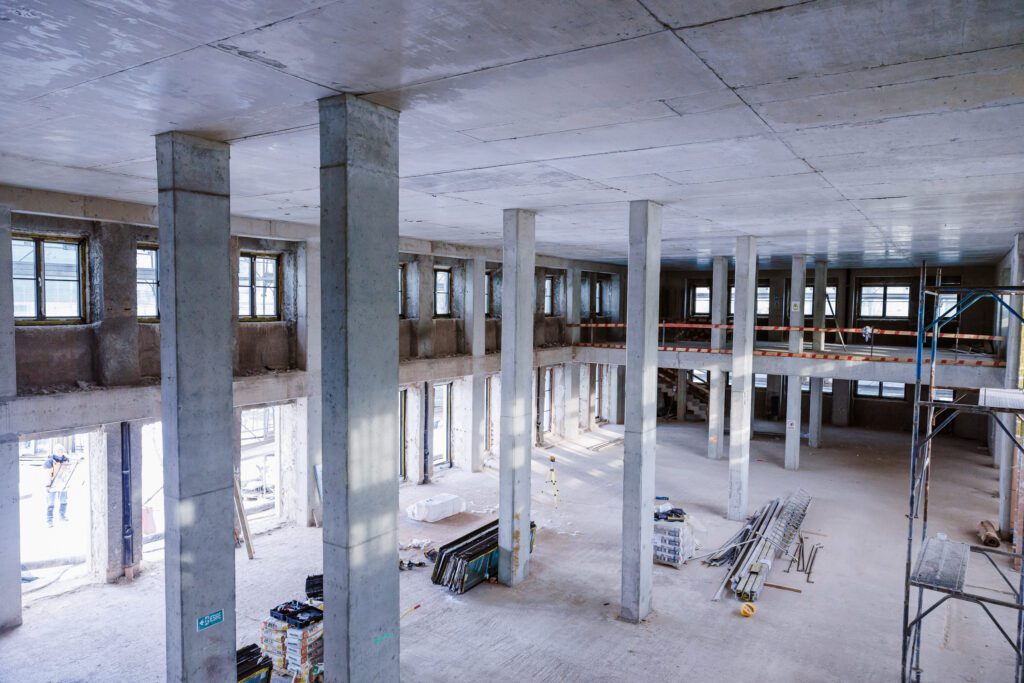
“The interior structure was rebuilt in three phases, reconfiguring the building one third at a time. The exterior walls were consolidated using shortcreting – a technique for applying concrete in thin, vertical layers, thus ensuring the stability of the masonry. On the inside, the building has been fully rebuilt, only preserving the original outer walls. We preserved the original vertical structure and geometrical proportions, while also integrating openings that allow for natural lighting in the indoor premises, which is a novelty compared to the original layout. The staircase has been completely upgraded and fitted with an elevator, and the roof has been rebuilt and fitted with sheet metal roofing panels for enhanced durability,” explained Vlad Samoil, project manager for RIVUS.
The preservation and reintegration of original materials, for the sake of sustainability, is an essential element of the rehabilitation. To this end, the bricks used in the original building have been salvaged and reused in the current intervention. In fact, the building has a unique history: the bricks that were also used in the original construction, had been previously salvaged from buildings damaged during World War II, in a context where communist era construction projects would frequently employ solutions of this type.
Sorin Guttman, the manager of the RIVUS mixed-used project, notes: “The bricks resulted from partial demolitions have been reused to restore the façade, because we wanted to preserve the visual authenticity. To us, this is a natural progression for the history of this place, which we revere and wish to see reflected in the new project. The administrative building with red brick façade is one of the most iconic industrial buildings in Cluj and we will repurpose it in the RIVUS project. Once completed, the building will accommodated mixed office and service premise, integrating the industrial past of the site into a contemporary urban concept, where heritage and modern functionality complement each other.”
Key figures for the uniqueness and extent of the conservation efforts for the red brick building:
- Restored brickwork area spanning 840 sqm, the equivalent of approximately 67,000 bricks.
- The consolidation entailed 1,300 cubic meters of concrete and 98 tons of armature.
- The works – entailing sanitation, demolition, consolidation, new structure rebuilding, and façade restoration works – were carried out over the course of approximately 24 months.
- The process of cleaning the brick joints, replacing damaged ones, and restoring the joints alone took approximately 6 months.
- The original timber truss roof has been fully rebuilt in metal, using 18.5 tons of metal structures.